

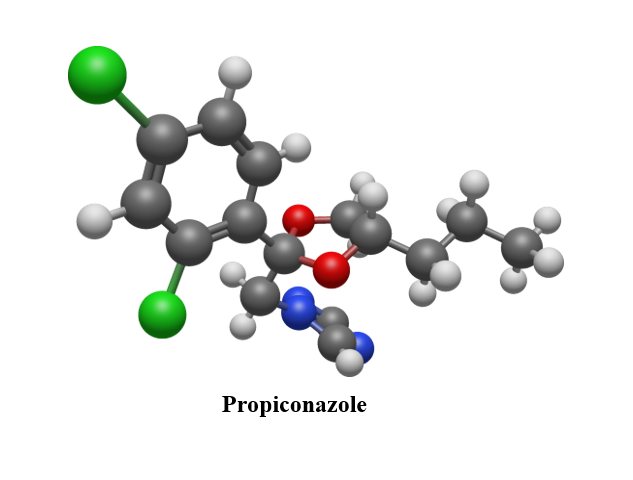
Discover Propiconazole – a broad-spectrum azole fungicide that effectively controls rice blast, rusts, powdery mildew, leaf blight, and leaf spots. Long-lasting protection, strong action, and low resistance risk.
Table of Contents
- What is Propiconazole?
- Mode of Action of Propiconazole
- Key Advantages of Propiconazole
- Disease Spectrum: What Does Propiconazole Treat?
- Comparison with Other Fungicides
- How to Use Propiconazole Effectively and Safely
- Popular Commercial Products Containing Propiconazole
- Usage Precautions
- Conclusion
1. What is Propiconazole?
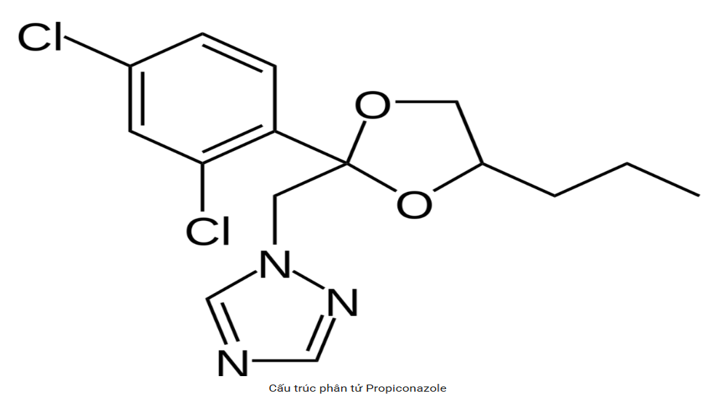
Propiconazole is a systemic, broad-spectrum fungicide from the azole (triazole) group. It is widely used on various crops to control fungal diseases affecting leaves, stems, flowers, and fruits.
- Molecular formula: C15H17Cl2N3O2
- Fungicide group: Triazole (azole)
- Properties: Strong systemic action, quickly translocated in plant tissues
- Key feature: Dual action – preventive and curative
2. Mode of Action of Propiconazole
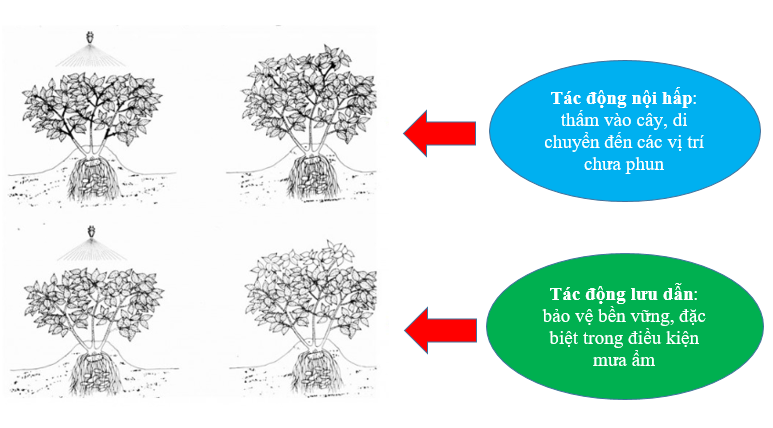
Propiconazole works by inhibiting the biosynthesis of ergosterol, a vital component of fungal cell membranes. Without ergosterol, the membrane structure collapses, preventing fungal growth and leading to cell death.
- Systemic action: Penetrates and moves within the plant to protect untreated parts
- Translaminar protection: Provides durable coverage, especially under humid or rainy conditions
- Both preventive and curative, best when used at early infection stages
3. Key Advantages of Propiconazole
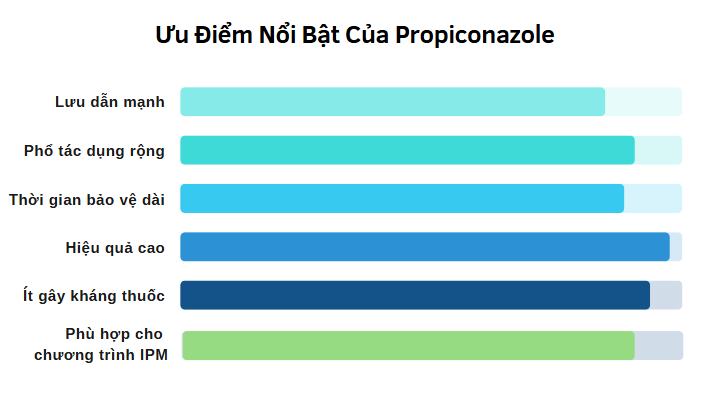
- ✅ Strong systemic movement, resistant to being washed off by rain
- ✅ Broad-spectrum control of many common fungal pathogens
- ✅ Long-lasting protection (up to 7–14 days)
- ✅ Highly effective against leaf, stem, and seed-borne diseases
- ✅ Low resistance risk if rotated properly
- ✅ Suitable for IPM (Integrated Pest Management) programs
4. Disease Spectrum: What Does Propiconazole Treat?
Propiconazole effectively controls the following fungal diseases:
|
Disease Type |
Common Crops Affected |
|
🌾 Rice blast |
Rice, turfgrass, ornamental plants |
|
🌿 Powdery mildew |
Cucumbers, melons, grapes, mangoes |
|
🍂 Rust diseases |
Coffee, beans, wheat |
|
🌱 Leaf spot, target spot |
Tomatoes, leafy vegetables |
|
🍃 Leaf blight, tip burn |
Corn, rice, fruit trees |
|
🍇 Fruit rot, flower blight |
Grapes, citrus, soursop |
5. Comparison with Other Fungicides
|
Criteria |
Propiconazole |
Mancozeb |
Azoxystrobin |
Copper oxychloride |
|
Fungicide group |
Triazole |
Dithiocarbamate |
Strobilurin |
Copper-based |
|
Action |
Systemic + translaminar |
Contact |
Systemic |
Contact |
|
Preventive + curative |
✅ Yes |
❌ Mostly preventive |
✅ Yes |
❌ Mostly preventive |
|
Systemic movement |
✅ Strong |
❌ None |
✅ Good |
❌ None |
|
Residual effect |
✅ 7–14 days |
❌ 3–5 days |
✅ 10–14 days |
❌ Short |
👉 Conclusion: Propiconazole is ideal for mixing with contact fungicides like Mancozeb or alternating with Azoxystrobin to reduce resistance risk.
6. How to Use Propiconazole Effectively and Safely
📌 Recommended Dosage:
- 10–25 ml per 16–25 liters of water, depending on crop and disease severity
- Spray both sides of leaves evenly; avoid spraying under intense sunlight
📌 Application Timing:
- Apply when disease first appears (small spots, light mildew, early rust)
- Spray every 7–10 days under wet or humid conditions
📌 Biological Safety:
- Do not spray during flowering or just before harvest
- Pre-harvest interval: 7–14 days, depending on crop
- May be combined with biological insecticides, but avoid mixing with alkaline products
7. Usage Precautions
- Rotate with other fungicides to prevent resistance
- Avoid more than 2 consecutive applications per season
- Do not mix with alkaline products (lime, sulfur, etc.)
- Store in a cool, dry place, away from direct sunlight
8. Conclusion
Propiconazole is one of the most effective, safe, and flexible fungicides available today. With strong systemic activity, broad-spectrum control, and dual preventive-curative action, it is a preferred choice for managing rice blast, powdery mildew, rusts, and leaf spots.
👉 Proper use and responsible rotation will help you maintain long-term effectiveness and protect your crops efficiently and safely.


Leave a comment