

Can Glufosinate Ammonium control both broadleaf and grassy weeds? Learn about its weed control spectrum, real-world effectiveness, and how to use it for optimal results without harming your crops.
Table of Contents
- What Is Glufosinate Ammonium?
- Difference Between Broadleaf and Grassy Weeds
- Can Glufosinate Kill Both Weed Types?
- Real-World Effectiveness on Common Weeds
- When Is Glufosinate Less Effective?
- How to Use Glufosinate for Best Results
- Conclusion
1. What Is Glufosinate Ammonium?
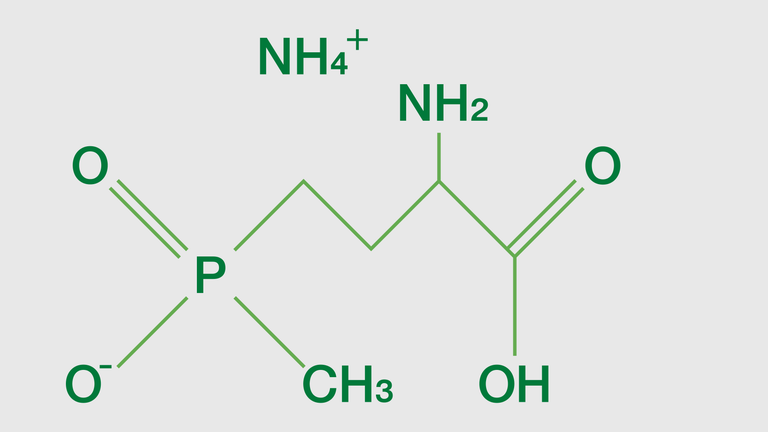
Glufosinate Ammonium is a non-selective contact herbicide that kills weeds where sprayed.
Mode of action: Inhibits glutamine synthetase enzyme → ammonia buildup in plant cells → tissue damage → rapid weed death.
Key Advantage: Not systemic – it does not translocate to roots, so it’s safer for crops when applied near the base.
2. Difference Between Broadleaf and Grassy Weeds

|
Feature |
Broadleaf Weeds 🌿 |
Grassy Weeds 🌾 |
|
Leaf Shape |
Broad, net-veined |
Narrow, parallel-veined |
|
Root System |
Fibrous, spreading |
Often deeper, more extensive |
|
Examples |
Spiny amaranth, creeping woodsorrel, purslane |
Crabgrass, cogongrass, torpedo grass |
3. Can Glufosinate Kill Both Weed Types?
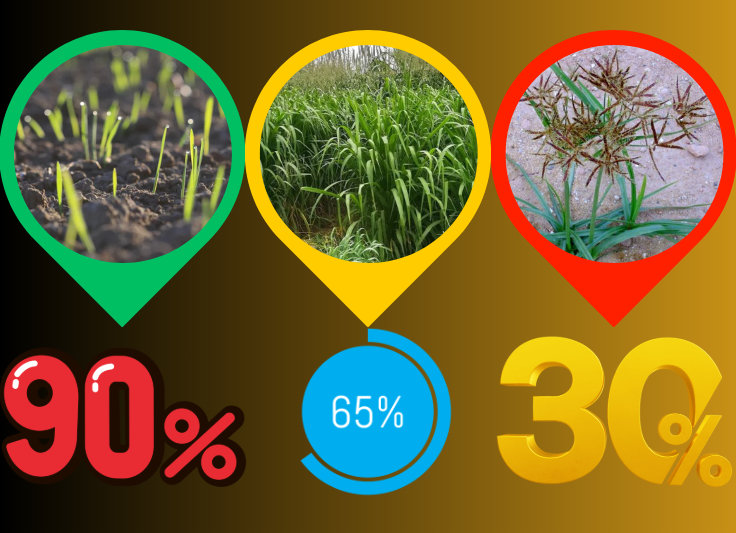
✅ YES – Glufosinate Ammonium can control both broadleaf and grassy weeds, but effectiveness varies depending on weed species, age, and condition.
- Young weeds: Very effective (90–100%)
- Mature, woody weeds or deep-rooted types: Reduced effectiveness
- Underground rhizome or tuberous weeds (e.g., nutgrass): May regrow if not fully exposed and sprayed
4. Real-World Effectiveness on Common Weed Types
|
Weed Type |
Category |
Glufosinate Effectiveness |
|
🌿 Spiny Amaranth, Creeping Woodsorrel |
Broadleaf |
✅ Very High |
|
🌿 Pigweed, Purslane |
Broadleaf |
✅ Good |
|
🌾 Crabgrass, Cogongrass (young) |
Grassy |
✅ Good when young |
|
🌾 Torpedo Grass, Goosegrass |
Grassy |
⚠️ May require repeat spraying |
|
🌿 Nutgrass (strong root system) |
Grassy |
⚠️ Difficult to eliminate fully |
|
🌿 Couch Grass (rhizomatous) |
Grassy |
❌ Not completely effective |
5. When Is Glufosinate Less Effective?
- Overgrown weeds with woody stems or taller than 25–30 cm
- Weeds regrowing from underground parts not directly sprayed
- Rainfall shortly after spraying – reduces absorption
- Underdosing or overly diluted mixtures
6. How to Use Glufosinate for Best Results
✅ Spray when weeds are young (10–20 cm tall, actively growing)
✅ Ensure thorough coverage on leaf surfaces – don’t miss the base or shaded areas
✅ Recommended dose: 40–60ml per 16 liters of water (depending on formulation)
✅ Do not mix with alkaline substances (lime, sulfur, etc.)
✅ Can be combined with pre-emergent herbicides for longer-term control
7. Conclusion
Glufosinate Ammonium is a broad-spectrum, non-selective herbicide that effectively controls both broadleaf and grassy weeds when applied correctly.
👉 Spray at the right stage, use the correct dosage, and follow proper technique to achieve effective weed control without damaging your crops or allowing regrowth.


Leave a comment