

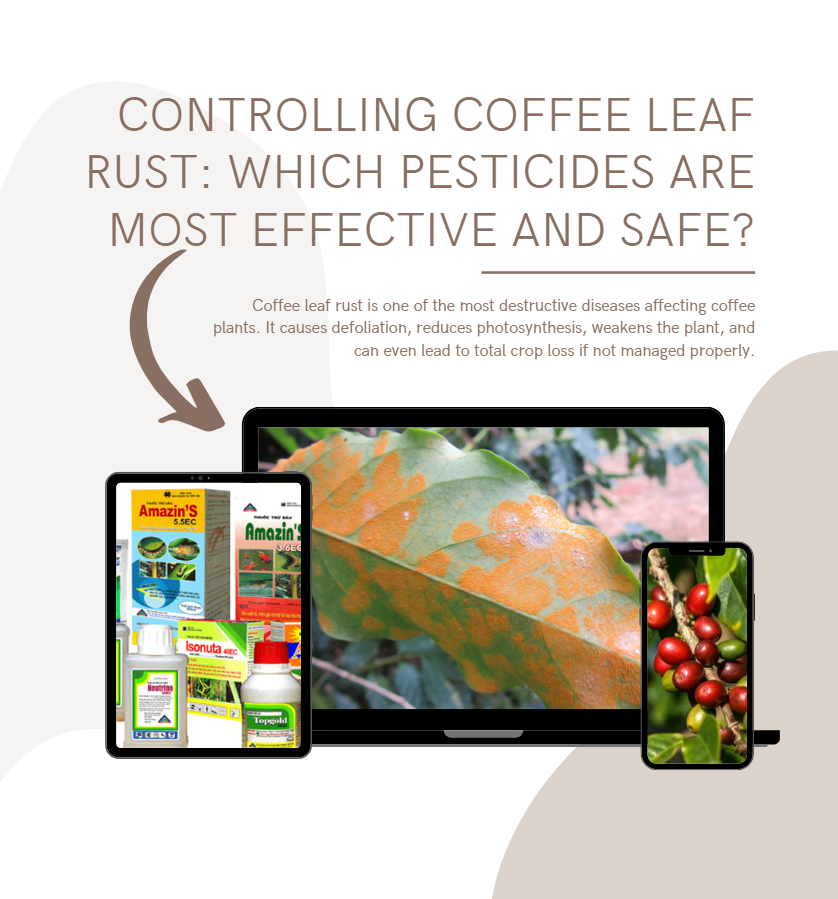
Coffee leaf rust is one of the most destructive diseases affecting coffee plants. It causes defoliation, reduces photosynthesis, weakens the plant, and can even lead to total crop loss if not managed properly.
So how can farmers effectively prevent this disease while using safe, low-residue, crop-friendly solutions? Let’s explore in detail below.
☣️ 1. What Is Coffee Leaf Rust and Why Is It Dangerous?
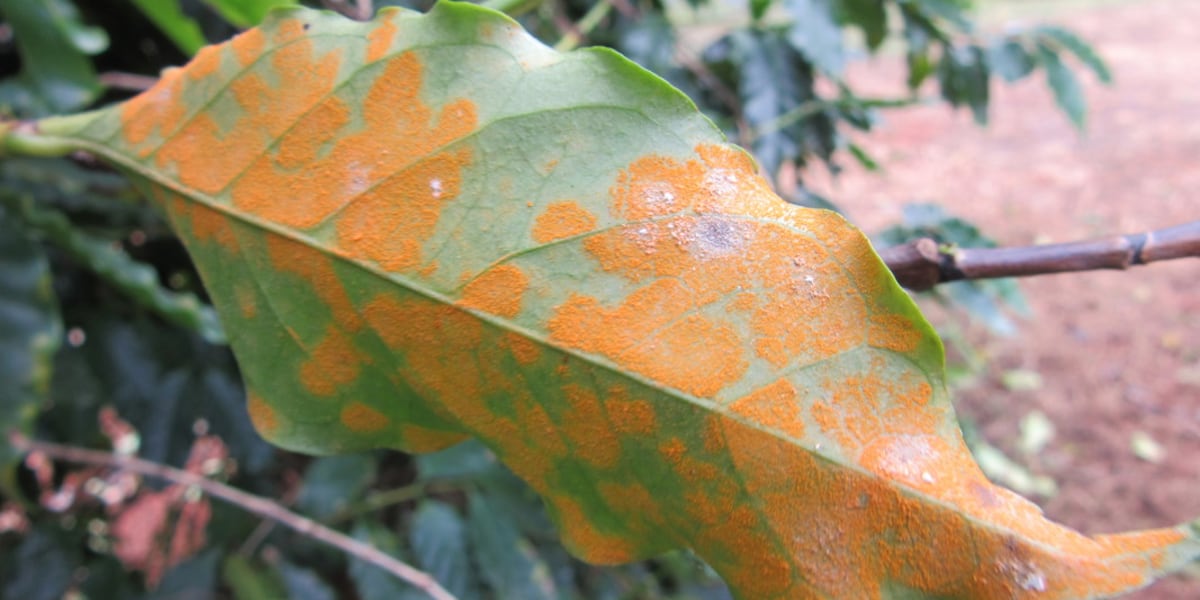
➤ Causal agent:
- Caused by the fungus Hemileia vastatrix
- Develops rapidly in humid, misty weather at 18–25°C
➤ Symptoms:
- Upper leaf surface: yellowish, patchy spots
- Lower leaf surface: orange, rust-colored pustules
- Leaves fall prematurely, leaving bare branches
➤ Impact:
- Can reduce yield by 30–70% if untreated
- Weakens plants, making them prone to other diseases
- Reduces flowering and fruit set in the following season
🔍 2. When Should You Control Leaf Rust?

- Late rainy to early dry season → best time for preventive spraying
- When humidity or morning fog is high → spray preventively before infection spreads
- Inspect every 7–10 days, and if more than 5% of leaves are infected, treat immediately
💊 3. Which Active Ingredients Work Best Against Coffee Rust?
|
Active Ingredient |
Mode of Action |
Advantages |
Recommended Formulation |
|
Propiconazole |
Systemic – penetrates leaf tissue to kill fungus internally |
Fast-acting, low phytotoxicity |
CS, SC – very safe |
|
Hexaconazole |
Strong systemic, effective on rust and other fungi |
Long residual activity |
CS or EC |
|
Tebuconazole |
Inhibits fungal growth |
Affordable, widely used |
SC |
|
Cymoxanil |
Kills newly germinated spores |
Excellent for prevention |
Combine with Mancozeb |
📌 Recommendation: Use CS (Capsule Suspension) formulations for:
- Extended control (10–30 days)
- High rainfastness
- Leaf safety (no burn or yellowing)
🧪 4. Spraying Schedule & Best Practices
📅 Annual Preventive Schedule
|
Timing |
Objective |
Suggested Actives |
|
Sept–Oct |
Pre–dry season |
Propiconazole CS |
|
Nov–Dec |
Stop disease spread in-field |
Hexaconazole, Tebuconazole |
|
Mar–Apr |
Post-harvest, plant recovery |
Combine foliar nutrients + CS fungicide |
💧 Application Guidelines

- Shake the bottle thoroughly before mixing (especially for CS)
- Use 400–600 L of water/ha
- Spray evenly, especially on leaf undersides where infection starts
- Do not mix arbitrarily with biofertilizers or oils without compatibility testing
🚫 5. Prevention Is Better Than Cure
To minimize rust outbreaks:
- Prune trees for better air circulation
- Apply balanced fertilization – avoid excess nitrogen, supply potassium
- Maintain adequate irrigation during the dry season
- Rotate active ingredients to prevent resistance buildup
🧩 6. Recommended Safe Product Set for Coffee Rust Control
|
Product |
Formulation |
Key Advantages |
|
PROPI-CS |
Capsule Suspension (CS) |
Strong adhesion, leaf-safe for coffee |
|
HEXA-ZOL 100EC |
Emulsifiable Concentrate |
Affordable, widely available |
|
Cymozeb Gold |
Systemic + contact mix |
Preventive & curative, fast action |
👉 Rotate 2–3 active ingredients per crop cycle to prevent resistance.
🟢 Conclusion
Coffee leaf rust is a “silent killer” of coffee plantations. With early detection and proper treatment—using the right products at the right time—control efficiency can reach 90–95%.
Farmers should prioritize:
✅ Propiconazole, Hexaconazole, Cymoxanil–based fungicides
✅ CS formulations during rainy seasons or when new shoots emerge
✅ Spraying in cool hours (early morning or late afternoon) following label intervals
✅ Combining good nutrition and pruning practices to keep plants strong and resistant


Leave a comment