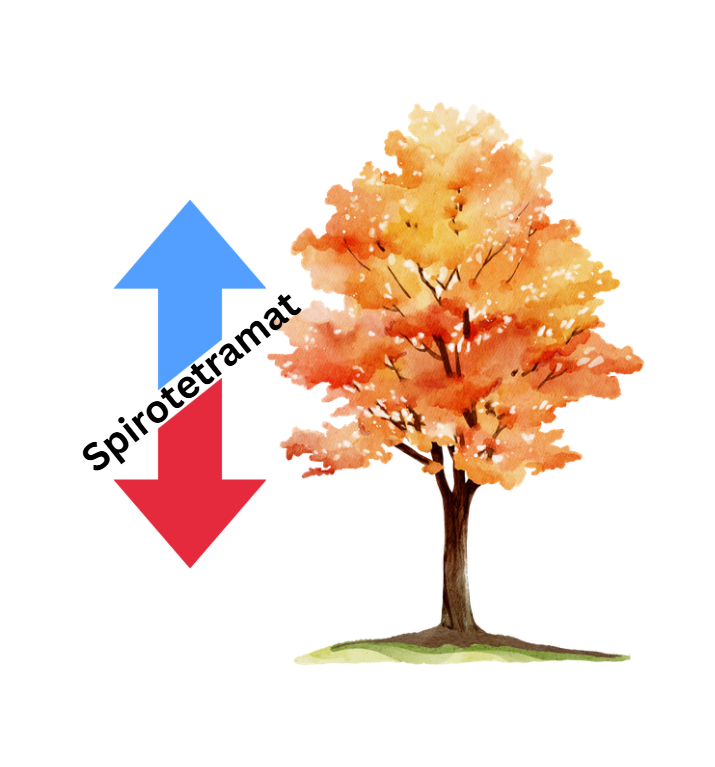
The “Two-Way Systemic” Mode of Action of Spirotetramat – Proper Understanding for Effective Use
March 28, 2026
1. What is Spirotetramat?
Spirotetramat is an insecticidal active ingredient belonging to the ketoenol group (IRAC 23), specifically used to control piercing-sucking pests such as aphids, planthoppers, thrips, and whiteflies. Its most outstanding feature is its unique two-way systemic movement, allowing protection of the entire plant rather than only localized action.
Spirotetramat is an insecticidal active ingredient belonging to the ketoenol group (IRAC 23), specifically used to control piercing-sucking pests such as aphids, planthoppers, thrips, and whiteflies. Its most outstanding feature is its unique two-way systemic movement, allowing protection of the entire plant rather than only localized action.
2. What is “Two-Way Systemic”?
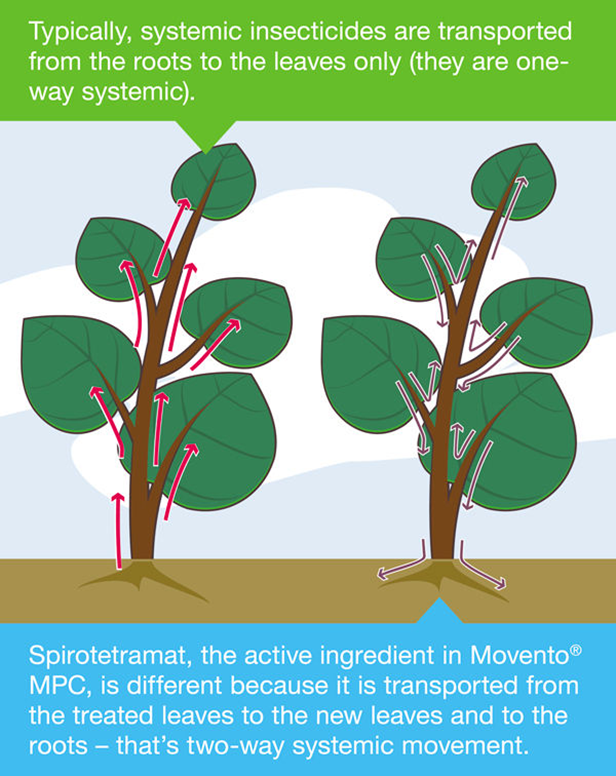
Normally, systemic insecticides move in only one direction (from roots to leaves – via the xylem).
However, Spirotetramat has the ability to:
- Move upward (xylem): from roots → stem → leaves
- Simultaneously move downward (phloem): from leaves → stem → roots
However, Spirotetramat has the ability to:
- Move upward (xylem): from roots → stem → leaves
- Simultaneously move downward (phloem): from leaves → stem → roots
👉 This is the two-way systemic mechanism
Technical significance:
- The active ingredient is distributed throughout the entire plant
- Controls pests in:
+ Leaf undersides
+ Dense canopy
+ Root zone (where other products cannot reach)
- The active ingredient is distributed throughout the entire plant
- Controls pests in:
+ Leaf undersides
+ Dense canopy
+ Root zone (where other products cannot reach)
3. Biological Mode of Action of Spirotetramat
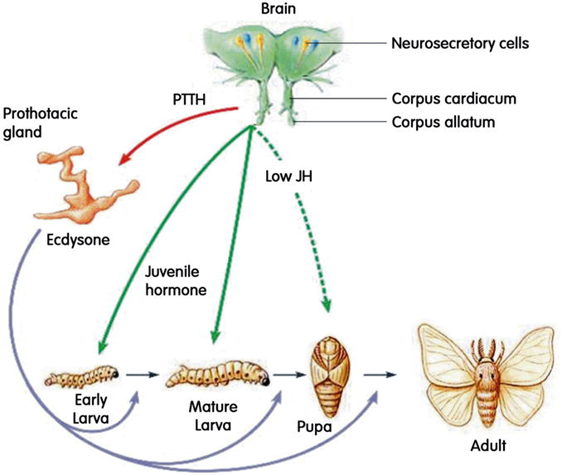
Spirotetramat does not act as a fast “knock-down” contact insecticide, but works through the following mechanism:
Inhibits lipid (fat) biosynthesis in insects
Inhibits lipid (fat) biosynthesis in insects
- Insects require lipids for:
+ Development
+ Molting
+ Reproduction
+ Development
+ Molting
+ Reproduction
👉 When affected:
- Larvae cannot molt
- Insects stop developing
- Reduced reproduction → disrupts the life cycle
- Larvae cannot molt
- Insects stop developing
- Reduced reproduction → disrupts the life cycle
Key characteristics:
- Most effective on immature stages (larvae)
- Long-lasting and deep activity, not just immediate kill
- Most effective on immature stages (larvae)
- Long-lasting and deep activity, not just immediate kill
4. Outstanding advantages of the two-way systemic mechanism

4.1. Comprehensive pest control
- No need for precise spray coverage at every position
- Still controls pests that:
+ Are hidden inside leaves
+ Live in roots
+ Are difficult to contact directly
- No need for precise spray coverage at every position
- Still controls pests that:
+ Are hidden inside leaves
+ Live in roots
+ Are difficult to contact directly
4.2. Long-lasting efficacy
- The active ingredient is translocated within the plant
- Provides long-term protection
- The active ingredient is translocated within the plant
- Provides long-term protection
4.3. Less affected by environmental conditions
- Not easily washed off like contact insecticides
- More stable performance under light rain conditions
- Not easily washed off like contact insecticides
- More stable performance under light rain conditions
4.4. Suitable for sustainable agriculture
- Minimal impact on beneficial organisms (when used properly)
- Suitable for IPM (Integrated Pest Management) programs
- Minimal impact on beneficial organisms (when used properly)
- Suitable for IPM (Integrated Pest Management) programs
5. When should Spirotetramat be used?
To fully utilize the two-way systemic mechanism, the following should be noted:
To fully utilize the two-way systemic mechanism, the following should be noted:
Optimal timing:
- When pests first appear
- At the larval/immature stage
- When pests first appear
- At the larval/immature stage
Not recommended:
- Spraying when pest populations have already heavily infested
- Expecting immediate “quick knock-down” results
- Spraying when pest populations have already heavily infested
- Expecting immediate “quick knock-down” results
👉 Because this is a growth-regulating insecticide, not a “knock-down” product
6. Common mistakes when using Spirotetramat
❌ Spraying too late → reduced effectiveness
❌ Increasing dosage because pests do not die immediately
❌ Not rotating insecticides → high risk of resistance
❌ Spraying too late → reduced effectiveness
❌ Increasing dosage because pests do not die immediately
❌ Not rotating insecticides → high risk of resistance
Recommendations:
- Rotate with other groups (different IRAC classes, not IRAC 23)
- Integrate into an IPM program
- Rotate with other groups (different IRAC classes, not IRAC 23)
- Integrate into an IPM program
7. Conclusion
The two-way systemic mechanism of Spirotetramat represents a major advancement in crop protection, enabling:
- Distribution of the active ingredient throughout the entire plant
- Effective pest control in multiple locations
- Sustainable pest management
- Distribution of the active ingredient throughout the entire plant
- Effective pest control in multiple locations
- Sustainable pest management
👉 However, to achieve optimal performance, farmers should:
- Apply at the right timing
- Clearly understand the mode of action
- Use the product in a proper and integrated manner
- Apply at the right timing
- Clearly understand the mode of action
- Use the product in a proper and integrated manner
Bình luận
Những bình luận mới nhất