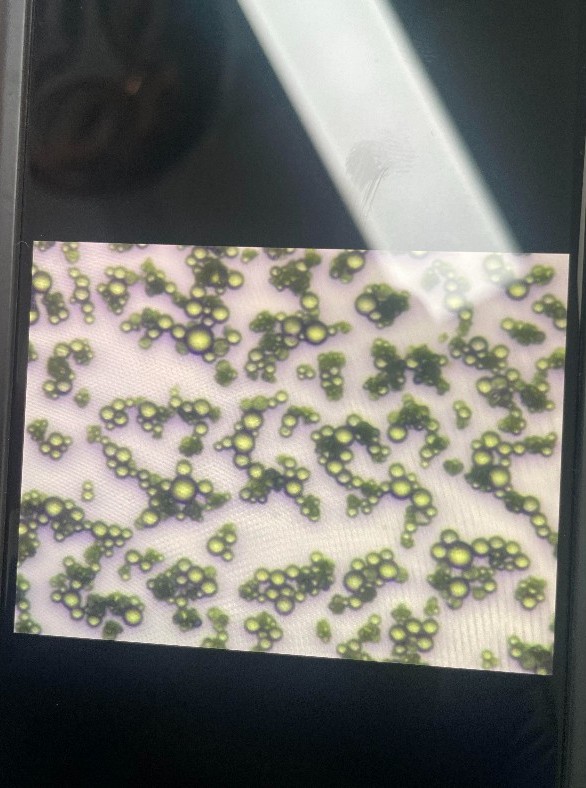

BMC proudly stands as the first company in Vietnam to research and successfully produce CS (Capsule Suspension) formulation pesticides—one of the most advanced formulations in the global crop protection industry.
Read More
BMC proudly stands as the first company in Vietnam to research and successfully produce CS (Capsule Suspension) formulation pesticides—one of the most advanced formulations in the global crop protection industry.
Read More
Bordeaux mixture (also known as Boóc-đô in Vietnamese) is one of the world’s first fungicides, discovered in the late 19th century and still widely used in agriculture today. Although it is a simple preparation of copper sulfate and lime, it effectively controls many serious fungal diseases in crops.
So, how exactly does Bordeaux mixture work? Why is it effective against fungi while still permitted in organic farming? Let’s explore.
Read More
Among the oldest and safest fungicides used in agriculture, the name “Bordeaux mixture” (also called Boóc-đô mixture in Vietnamese) holds a special place. It was the first chemical mixture ever used by humans to control plant diseases—and even today, Bordeaux mixture is still trusted in both organic and conventional farming
Read More
In the era of modern agriculture where food safety and consumer health are top priorities, the use of plant protection products (PPPs) must strictly comply with pre-harvest intervals (PHI) and maximum residue limits (MRL). So for Propiconazole—a widely used fungicide—what is the appropriate PHI? Does it leave harmful residues?
Let’s explore the detailed answers below.
Read More
Rice blast and grain discoloration (often linked to kernel smut or fungal/biotic infection) are two of the most dangerous diseases in rice cultivation, causing significant losses in both yield and grain quality. Among the current control solutions, Propiconazole is highly recommended by experts for its strong efficacy and broad-spectrum activity.
But how effective are Propiconazole-based fungicides in managing these diseases? And what should farmers be aware of when using them? Let’s dive into the details below.
Read More
Propiconazole is a triazole fungicide, well-known for its strong systemic activity, upward translocation, and broad-spectrum efficacy. While it is widely used in rice and vegetables, Propiconazole also proves effective on industrial crops such as black pepper, coffee, and rubber.
This article analyzes how Propiconazole works on each of these crops—from target diseases and usage to key technical notes.
Read More
Among the many active ingredients used in fungal disease management today, Propiconazole is consistently one of the most commonly applied across various crops. But what makes it so highly favored, and why does it appear in so many broad-spectrum fungicide formulations?
Let’s explore the scientific and practical reasons behind the popularity of Propiconazole.
Read More
Propiconazole is one of the most widely used active ingredients in fungicides today, especially effective against diseases such as rice blast, rust, powdery mildew, leaf spots, anthracnose, and more. However, not everyone understands how Propiconazole works, why it is so effective, and why it's widely used in many crop protection products.
Let’s dive into the detailed mechanism of action of Propiconazole in the article below.
Read More
In managing fungal diseases in crops, farmers frequently encounter active ingredients like Cymoxanil, Metalaxyl, Mancozeb, and Fosetyl-Al. Each has its own strengths and limitations, suitable for different crops, disease types, weather conditions, and usage timings. This article will help you understand their differences and how to choose the right one for your crop cycle.
Read More
Cymoxanil is an important active ingredient in the field of crop protection, particularly effective in preventing and treating fungal diseases. With its unique mode of action, Cymoxanil is widely used in various fungicides for crops. Let’s explore the details of Cymoxanil in the following article.
Read More